Golf Travel
 Leaderboards
 Become a Member
 Shop
 Trade In
From the PGA
3 Attire Tips For Your Fall Round
Published on

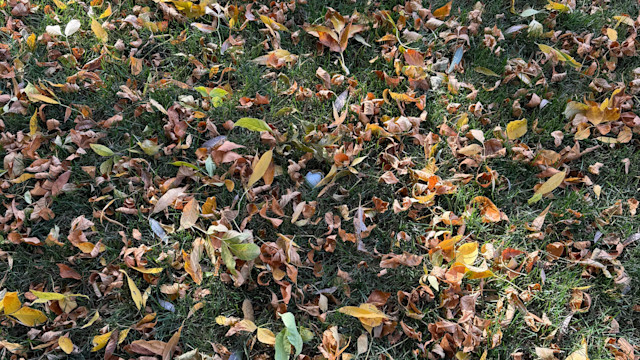
Fall golf can be amazing: The long shadows, crisp air and changing colors provide an outstanding backdrop for the final rounds of the season.
But Fall golf also calls for preparation. In addition to navigating the leaves (and the rules around them), you’ll want to be sure to have the right attire for weather that can change on a hole-by-hole basis.
Here are three things to keep in mind as you prepare for your round that will have you ready from the first tee box to the 18th green, as well as some helpful tips from PGA Professional Ryan Adams.
Layer Up
The Issue: One of the most challenging aspects of Fall golf is the temperature: It can be rather cold on your drive to the course, and feel quite warm by the time you reach the turn.
The Solution: Dressing in easily removable layers can help solve this problem: a quarter-zip, vest, or lighter sweater can be easily removed as you make your way throughout the course.
Consider: While wearing layers sounds like fairly obvious advice, one thing many golfers do not consider is that their wardrobe choices should reflect their game. If your swing is faster and has more movement, opting for a vest frees up your arms so as to not impede your swing and gives you complete range-of-motion. If you swing more slowly or don’t have the need for a ton of movement, a quarter zip or sweater may be a stylish way to keep you comfortable as you play. Be sure to evaluate your movement patterns to find options that will work best for you. As the saying goes, form should follow function: you want to keep warm while not impacting your swing.
The Short Takeaway: Layering will help with fluctuating Fall temperatures, and your choices should reflect your personal swing and how you best operate.
PGA Professional Tip: It’s better to bring a few more layers than leave layers at home and be freezing. If you feel like a layer is restricting you, remove it for the shot, and then put it back on. That way, you’re not throwing off your motion due to an extra layer.
Don’t Forget Your Hands
The Issue: It is very easy to lose your feel of the club if your fingers are stiff and chilly, especially if your round is earlier in the day. Executing good shots - especially those shots around the green where touch is imperative - can be a real challenge with cold hands.
The Solution: It is vital to keep your hands warm, especially in between shots. Golfers often prepare for the cold with hats and layers, only to simply grab their usual glove and treat the round like normal. Instead, try a few easy fixes: Opt for a pair of winter gloves in-between shots; carry hand warmers with you and keep them in your pocket; have an extra golf glove should the first get wet and chilly.
Consider: Keeping your hands warm sounds simple, but is something golfers often don’t consider when getting ready for a round in the Fall. In addition to the air temperature, remember the ground conditions: anytime you tee up or mark your ball, you may be introducing a chill to your hands. If you are walking, hand warmers are easier to carry in your pocket and less cumbersome than a pair of winter gloves, which may be better suited if you’re taking a cart.
The Short Takeaway: Fall conditions can make for cold hands. Have a plan to keep your hands dry and warm between shots so you don’t lose your touch or feel.
PGA Professional Tip: Your hands are the only connection to the club so it’s important to keep them in tip-top shape during chillier fall rounds. Put your hands in your pockets where handwarmers are between shots. Then by the time you hit your next one, the hands are warm and ready.
Footwear Is Vital
The Issue: The ground in the Fall is often damp, dewy and chilly. Your footing can suffer dearly if you are not properly equipped.
The Solution: Be sure that your shoes are waterproof and provide enough traction for the conditions. Having wet, cold feet by the time you reach the first fairway will be hard to shake for the rest of the round. Similarly, opt for a pair of heavier socks that will keep your feet warm.
Consider: With the ground wet and full of various impediments - from mud to sticks to leaves and straw - your footing can easily suffer if you are not prepared. Losing your footing after a great drive is not only annoying, it can compound if you slip or kick up mud to the rest of your ensemble.
The Short Takeaway: Ensure your footwear is waterproof and will provide enough traction, and wear socks that will keep your feet warm as you traverse the course.
PGA Professional Tip: If you don’t have a pair of waterproof and traction-enabling golf shoes, this is a good time of year to look. Damp conditions can lead to wet socks if your shoes aren’t waterproof. If your soles aren’t able to grip the ground, it makes every swing more difficult. You can avoid both. Also… slipping may not just be your shoes. Remember good rhythm and tempo.