Golf Travel
  Leaderboards
  Become a Member
  Shop
Shop  Trade In
 quick coaching
How to Beat Golf’s Scariest Lies: 3 Simple Shots for Creepy Collars, Trees, and Bunkers
By Brendon Elliott, PGA
Published on
Golf has a funny way of making ordinary mistakes look much worse when you finally reach the ball.
Miss a green by two feet and the ball can settle against a thick collar, with grass sitting directly behind the putter. Push a tee shot into the trees and a trunk can take away your stance. Find a bunker and, once in a while, the smartest club in your hand is not a wedge at all.
Those are the situations when golfers start inventing a swing on the spot. Instead of improvising under pressure, practicing a few odd-looking shots ahead of time gives you a dependable plan.
None of these is a trick shot for social media. Each has a very simple purpose: remove the part of the lie that is causing the problem and get the ball moving toward safety. Around Halloween, that is a useful way to look at the shots that make golfers freeze.
Quick Summary: How to Escape 3 Nightmare Golf Lies
- Ball Pressed Against the Collar: Toe-down putter stroke (raises handle, contacts ball off the toe to miss the taller grass).
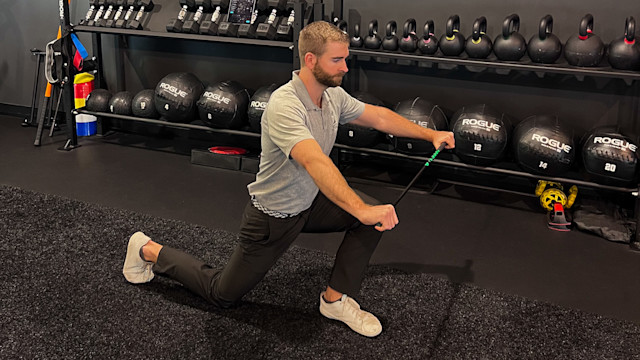
- Tree Blocking Your Normal Stance: Reverse-handed wedge chip (flipped clubface, narrow stance, small chipping motion into an opening).
- Shallow, Firm Bunker with Low Lip: Putter off the sand (treat it like a long putt to roll the ball directly onto the green).
1. When the Collar Is Behind the Ball: Use the Toe of Your Putter
The Problem
The ball rests on short grass, but it has stopped right against a thicker fringe collar. With a normal putting setup, the back of the putter catches the taller grass before the face reaches the ball, knocking the stroke offline or killing ball speed.
The Solution: Toe-Down Putter Stroke
Instead of switching to a wedge, change how the putter sits at address:
- Adjust Your Setup: Stand a little closer to the ball and raise the handle until the heel of the putter is suspended off the ground. Only the toe section should brush the grass.
- Position the Ball: Play the ball near the middle of your stance.
- Make a Standard Stroke: Execute a normal putting motion.
By raising the heel, you shrink the amount of clubhead traveling through the collar grass. Because contact occurs away from the sweet spot, the strike will feel different and carry less speed than a standard putt.
When to Use This Shot
- Best used when: The ball only needs to clear 1 to 2 inches of taller fringe grass before reaching the putting surface.
- Avoid when: You must carry rough, a bunker, or several yards of fringe. Choose a chip or pitch shot instead.
How to Practice
Set up at five different spots around a practice green. Hit three balls from each spot:
- Phase 1 (Direction): Focus on starting the ball on your intended line. Continue until 10 out of 15 balls start on target.
- Phase 2 (Distance Control): Once directional control is consistent, begin judging distance.
2. When a Tree Steals Your Stance: The Reverse-Handed Escape
The Problem
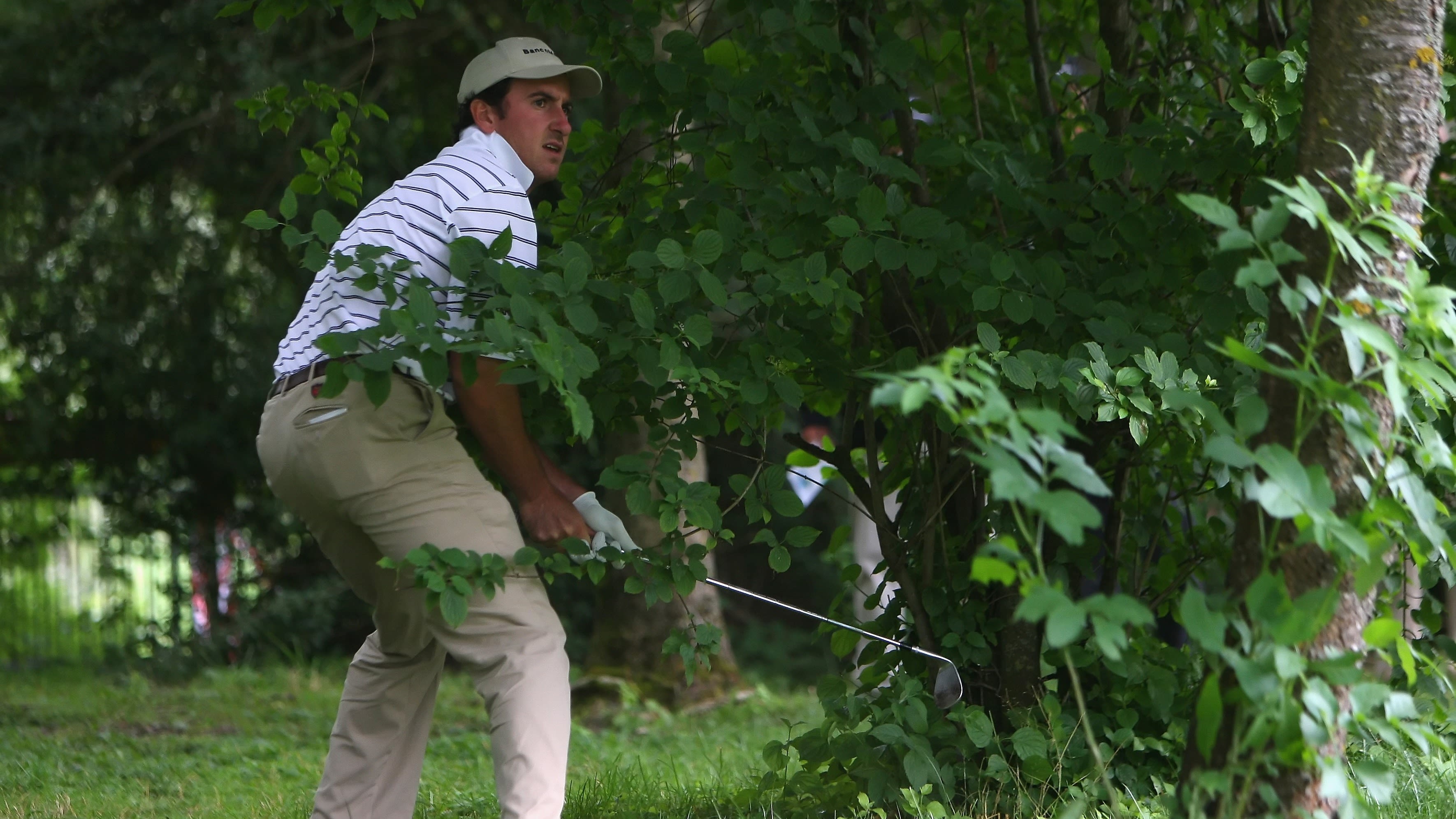
A tee shot strays into the trees, leaving the ball close enough to a trunk or obstruction that your normal stance disappears.
Safety Warning: Always inspect the surrounding ground before swinging near trees. If a root, rock, or trunk sits in the swing path, take relief under the Rules of Golf or take an unplayable lie. Saving one stroke is never worth a wrist injury.
The Solution: Flip-Club Motion
If the area around the ball is clear of safety hazards and the only barrier is your stance, play from the opposite side:
- Change Sides: Stand on the opposite side of the ball (e.g., set up left-handed if you are naturally right-handed).
- Invert the Clubhead: Take a wedge or short iron and flip it so the back of the clubhead faces the target/ball.
- Execute the Shot: Grip down on the handle, narrow your stance, and make a controlled, small chipping motion.
The goal is not maximum distance—it is a clean strike that advances the ball 10 to 30 yards into a clear fairway opening.
How to Practice
Do not attempt this shot for the first time on the course next to a tree trunk:
- Practice in an open short-game area.
- Begin with waist-high swings aimed at a 15-yard wide target corridor.
- Practice until you can reliably place 7 out of 10 balls inside that window.
3. When the Bunker Has Almost No Lip: Consider the Putter
The Problem
Golfers often default to a sand wedge whenever a ball enters a bunker. However, taking a wedge in firm sand with a low lip introduces unnecessary variables like judging how much sand to take.
The Solution: Putting Out of Sand
When conditions allow, treat the bunker shot like a long lag putt:
- Set Up: Take a standard setup for a long putt.
- Accelerate Through: Keep the clubhead moving smoothly through impact. Sand absorbs energy quickly, so expect the ball to roll slower than it would on grass.
- Focus on Green Access: The primary objective is simply getting the ball onto the grass surface, where it will roll normally.
When to Avoid Putting from Sand
- Do not use this technique in soft, fluffy sand.
- Do not use this technique if the ball must climb a steep bunker lip.
- Do not use this technique if your putter path passes through deep footprints or ridges before impact.
How to Test This Technique
In a practice bunker with a low edge:
- Hit 5 balls using a standard sand wedge setup.
- Hit 5 balls using your putter from the same spot.
- Track how many balls finish on the putting surface with each club.
Use the club that yields the higher success rate on the course.
Frequently Asked Questions (FAQ)
What is the best shot when a ball is stuck on the fringe collar?
The toe-down putter stroke is often the safest choice. By raising the handle so only the toe touches the turf, you prevent the heel and back of the putter from snagging in the taller grass.
Can you legally putt out of a bunker in golf?
Yes. The Rules of Golf allow you to use any conforming club—including a putter—from anywhere on the golf course, including sand bunkers.
How do you hit a ball when a tree is blocking your stance?
Stand on the non-dominant side of the ball, turn a short iron or wedge backward, narrow your stance, and execute a small chipping motion to pop the ball back into the fairway.Scary golf lies become costly when you insist on making them look normal. The next time you face an intimidating lie, stop trying to manufacture a perfect shot—choose the simplest escape route.
PGA of America Golf Professional Brendon Elliott is an award-winning coach and golf writer. Read his recent “The Starter” on R.org and his stories on Athlon Sports. To stay updated on his latest work, sign up for his newsletter and visit OneMoreRollGolf.com.