Golf Travel
 Leaderboards
 Become a Member
 Shop
 Trade In
quick coaching
How to Putt from the Fringe and Rough: Lessons from Collin Morikawa at Pebble Beach
By Brendon Elliott, PGA
Published on
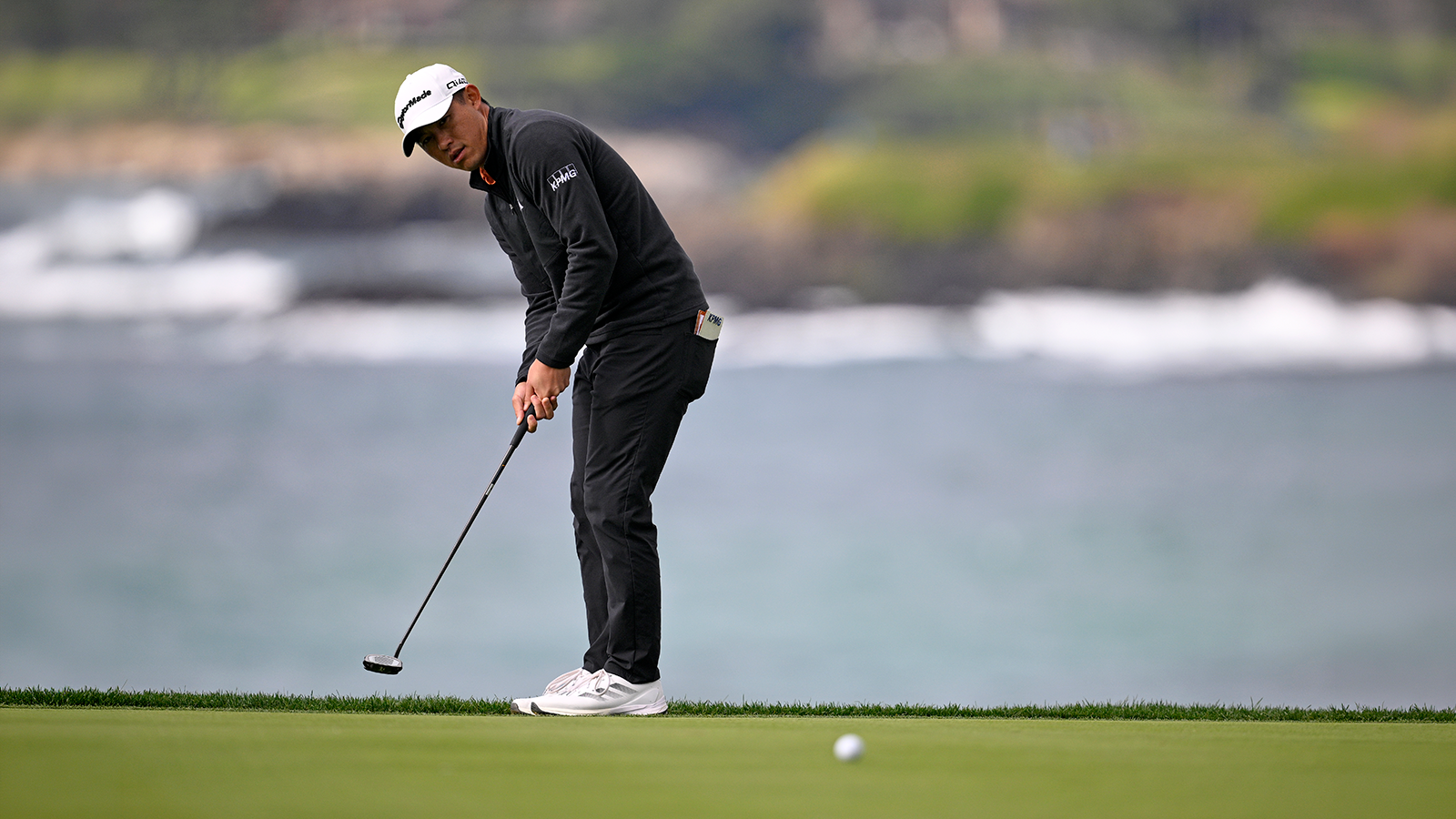
When Collin Morikawa stood beside the 18th green at Pebble Beach needing a birdie to secure his victory at the 2026 AT&T Pebble Beach Pro-Am, he faced a critical short-game decision: putter, bladed wedge, or utility wood?
While Morikawa successfully navigated the lie using his flatstick to set up a championship-winning putt, he later admitted a bladed 60-degree wedge might have handled the nestled lie even better.
Putting from off the green—often called the "Texas Wedge"—removes the risk of chunking or thinning a chip, but it requires precise lie assessment and stroke control. Below is a complete guide to mastering the off-green putt and knowing when to blade a wedge instead.
TL;DR: How to Putt from the Collar and Fringe
To putt effectively from the rough or fringe:
- Inspect the Lie: Check grass density immediately behind the ball. If thick blades press against the back of the ball, switch to a bladed wedge or chip.
- Setup Level and Forward: Set the putter sole flat on the turf with the toe and heel level. Position the ball slightly forward of center without forward-pressing your hands.
- Lengthen the Stroke: Use a longer, smooth pendulum backswing rather than a short, punchy hit. Let clubhead momentum drive the ball through the grass.
- Pace Over Line: Allow for initial turf deceleration, then gauge green speed once the ball breaks out onto the putting surface.
1. Lie Assessment: Reading the Turf Around the Ball
The turf texture surrounding the ball determines whether a putter is viable.
[Open Lie: Recommended for Putter]
Putters glide cleanly onto equator
\ | /
O====O <- Ball sitting high
~~~~~~~~~~~~~~~~~ Fringe / Collar
[Nestled Lie: Better for Bladed Wedge]
Grass impedes face contact & slows speed
||| \ | / |||
||| === ||| <- Ball buried
~~~~~~~~~~~~~~~~~~~~~~~~ Deep Rough
Putters glide cleanly onto equator
\ | /
O====O <- Ball sitting high
~~~~~~~~~~~~~~~~~ Fringe / Collar
[Nestled Lie: Better for Bladed Wedge]
Grass impedes face contact & slows speed
||| \ | / |||
||| === ||| <- Ball buried
~~~~~~~~~~~~~~~~~~~~~~~~ Deep Rough
- The Grass Behind the Ball: Inspect the area 2 inches directly behind the ball. Thick grass will catch the putter heel or sole, twisting the face open or closed prior to impact.
- Surface Irregularities on the Line: Look for aeration holes, ridges, depressions, or bare spots between the collar and the putting surface. Walk parallel to your intended line (without stepping on it) to verify a smooth rollout.
- Downhill Slopes Past the Collar: If the putting green slopes steeply downhill from the fringe, a putting stroke firm enough to chop through heavy grass will often shoot past the hole. In downhill scenarios, a soft chip that flies over the friction zone offers superior speed control.
2. Putter Technique from the Fringe
Avoid the common mistake of shortening the backswing and flicking the wrists through impact.
- Maintain Natural Loft: Place the ball slightly forward of center in your stance. Avoid pressing your hands aggressively forward at address; delofting the putter drives the ball directly down into the turf, causing it to bounce erratically.
- Sole Alignment: Keep the putter sole completely level—do not raise the toe or heel.
- Practice Sweeps: Hover the putter blade a fraction of an inch above the grass and make practice strokes beside the ball. If the grass consistently grabs the club sole on rehearsal swings, abandon the putter.
- Lengthen the Pendulum: Let the stroke lengthen naturally on both sides of the ball while maintaining steady wrist pressure. Inertia—not wrist snap—should produce the required speed.
3. Comparison: Putter vs. Bladed Wedge vs. Chip Shot
Shot Selection | Best Lie Condition | Main Advantage | Primary Risk |
Putter | Short fringe, smooth collar, ball sitting high | Eliminates duffed or thinned chips; easiest roll to gauge | Face twists or grabs if rough is deep |
Bladed Wedge | Nestled ball, light-to-medium rough against the grain | Leading edge contacts ball equator without snagging grass | Inconsistent speed if struck off-center |
Standard Pitch/Chip | Deep rough, downhill green slope, hazard in front | Carries friction zones and stops soft | Requires precise turf contact and lie manipulation |
What is a "Bladed Wedge"?Blading a wedge off the fringe means setting up with a high-lofted wedge (such as a 56° or 60°), hovering the club, and striking the equator of the ball with the leading edge. This launches the ball on a low roll along the grass without dragging a wide putter sole through heavy rough.
4. Practice Routine: Dialing In Off-Green Distance Control
Work on this systematic progression to master off-green putting before putting a card in your pocket:
- The 1-Foot Fringe Ladder:Find a flat hole approximately 25 feet away. Place four golf balls one foot into the fringe on clean lies. Stroke each toward the hole with the goal of stopping every ball within a 3-foot radius.
- Diagnose Poor Strikes:If an attempt finishes short, evaluate contact before simply swinging harder. Striking the turf behind the ball or missing the sweet spot kills rollout speed; correcting contact often fixes distance problems without requiring a larger stroke.
- Step Back One Foot:Move back another foot into thicker grass while keeping the target distance the same. Note how much more backswing length is required to push the ball through the additional friction.
- Side-by-Side Wedge Test:From the deeper lie, strike three putts and three bladed wedges toward the same target. Compare your proximity to the hole to confirm which shot delivers more consistency under pressure.
Frequently Asked Questions
When should you blade a wedge instead of using a putter?
A bladed wedge is preferable when the ball is nestled down in longer grass or resting against the collar. Because a wedge's leading edge sits higher off the ground than a putter face, it strikes the equator of the ball cleanly without dragging the clubhead through dense grass blades.
How does grass grain affect an off-green putt?
Grain running into the stroke (against the target) grabs the putter head and slows the ball dramatically off the face. Grain sloping toward the green allows the putter to glide smoothly and rolls faster.
Should I change my putting grip when putting from the fringe?
No. Maintain your standard putting grip, grip pressure, and posture. The primary mechanical adjustment is stance ball position (slightly forward) and stroke length (slightly longer backswing).
PGA of America Golf Professional Brendon Elliott is an award-winning coach and golf writer. Read his recent “The Starter” on R.org and his stories on Athlon Sports. To stay updated on his latest work, sign up for his newsletter and visit OneMoreRollGolf.com.