 Golf Travel
 Leaderboards
 Become a Member
 Shop
 Trade In
Fitness
Where Clubhead Speed Comes From: Use the Ground to Hit Longer Drives
By Kian O' Donnell, PGA
Published on
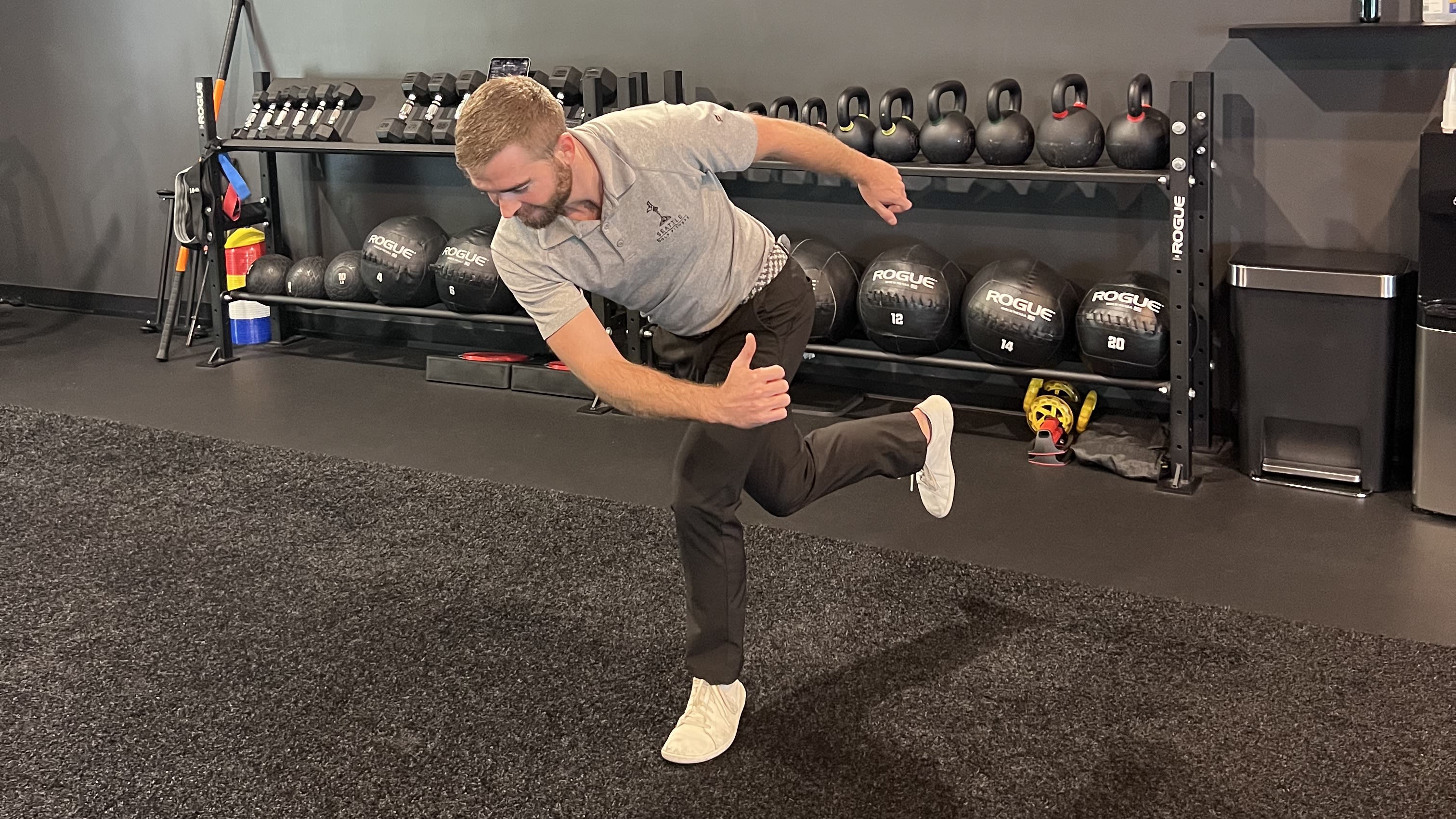
Every golfer wants more clubhead speed, but many players assume the answer is simply to swing harder.
In reality, golfers create speed by using the ground efficiently. The ground helps generate force, and that force travels through the body... from the feet and legs to the hips, torso, arms and, finally, the clubhead.
Understanding how this process works can help you train more effectively and generate power without relying only on your hands and arms.
Where Does Golf Clubhead Speed Come From?
Golf clubhead speed starts with the ground.
During the downswing, golfers apply force into the ground through their feet. That force moves through the body and contributes to the rotation and movement that accelerate the clubhead.
This sequence is often called the kinetic chain. Each body segment transfers energy to the next:
- Feet
- Legs
- Hips and pelvis
- Torso
- Arms
- Club
When the sequence is well coordinated, energy moves efficiently through the body and into the club. When one segment does not contribute effectively, the golfer may lose speed or compensate by trying to hit harder with the hands and arms.
The Three Types of Force in the Golf Swing
Golfers use three primary types of force to create clubhead speed: horizontal, vertical and rotational force.
1. Horizontal Force
Horizontal force moves the body or center of mass laterally, often toward the target.
For a right-handed golfer, pressure and force typically move toward the lead side during the transition and downswing. This lateral movement helps the golfer shift pressure and create a foundation for the rest of the swing.
Exercises that develop horizontal force include:
- Skater jumps
- Lateral bounds
- Side-to-side medicine-ball throws
- Explosive lateral movements
2. Vertical Force
Vertical force occurs when you push into the ground and the ground pushes back against you.
This action is sometimes described as “pushing into the ground.” However, it does not mean simply standing up or jumping straight into the air during the downswing.
Watch the lead hip of a skilled player in slow motion. As the downswing begins, the lead hip may rise while the arms and hands continue moving downward toward impact. The golfer pushes into the ground, the ground provides resistance, and the body responds by creating upward force and rotation.
Exercises that develop vertical force include:
- Squat jumps
- Box jumps
- Countermovement jumps
- Explosive step-ups
3. Rotational Force
Rotational force creates torque, causing body segments to rotate around an axis.
In the golf swing, rotation is transferred through a sequence that includes the:
- Feet
- Legs
- Pelvis
- Torso
- Arms
- Club
Horizontal and vertical forces work together to help create this rotation. The result is a coordinated movement that can accelerate the clubhead more effectively than an arm-dominant swing.
How the Kinetic Chain Creates Golf Swing Speed
The golf swing develops from the ground up.
As the downswing begins, the golfer pushes into the ground with the feet. Force then moves through the legs, hips, torso and arms before reaching the clubhead.
This process happens quickly, but the concept is straightforward: each segment of the body passes energy to the next. The more efficiently that energy travels, the more speed the golfer can potentially deliver to the clubhead.
This is why clubhead speed does not come solely from the hands. The hands and arms play an important role, but they are part of a larger movement sequence.
Why Rotation Is Important for Clubhead Speed
Rotation is a major part of how golfers create and transfer speed.
During the backswing, you load into the trail side and prepare your body to move. As the downswing starts, you push both horizontally and vertically into the ground. Those forces help create the rotation that moves the body and ultimately accelerates the club.
A golfer who tries to create speed only by throwing the arms at the ball may lose the benefits of this sequence. In contrast, a golfer who uses the ground effectively can create speed with a more coordinated movement.
The goal is not necessarily to swing with maximum effort. The goal is to improve how efficiently force is produced and transferred.
Horizontal Force vs. Vertical Force: Which One Matters More?
Both horizontal and vertical force contribute to clubhead speed, but golfers do not all create speed in exactly the same way.
Some players naturally rely more on horizontal force and lateral movement. Others produce more speed through vertical force and the ability to push into the ground.
That difference matters when designing a training program. The best exercises for one golfer may not be the best exercises for another.
If you rely more on horizontal force...
Emphasize explosive lateral movements, such as:
- Skater jumps
- Lateral bounds
- Side shuffles with resistance
- Lateral medicine-ball throws
If you rely more on vertical force...
Emphasize jumping and pushing exercises, such as:
- Squat jumps
- Box jumps
- Jumping lunges
- Explosive step-ups
Both qualities are valuable. However, identifying the type of force that best matches your swing may help you choose exercises that support your specific speed profile.
How to Increase Clubhead Speed
To increase clubhead speed, focus on more than swinging harder. Consider these key principles:
- Use the ground. Create force through your feet rather than relying only on your arms.
- Improve sequencing. Allow energy to move from the lower body through the torso and into the club.
- Train both horizontal and vertical force. Include lateral and jumping movements when appropriate.
- Develop rotational power. Use exercises that challenge your ability to rotate while maintaining control.
- Prioritize technique. More effort does not always produce more speed if the sequence is inefficient.
- Train safely. Start with movements you can perform with good technique and progress gradually.
If you are new to explosive exercises or have an injury history, consult a qualified golf fitness professional or medical professional before beginning a power-training program.
The Bottom Line
Clubhead speed does not start with the hands. It starts with the ground.
The most effective players create and transfer force through a coordinated sequence involving the feet, legs, hips, torso, arms and club. Horizontal, vertical and rotational forces all contribute to that process.
The better you can use the ground and transfer energy through your body, the more efficiently you can swing the club—and the greater your potential for increased clubhead speed.
Frequently Asked Questions
Where does clubhead speed come from?
Clubhead speed comes from the efficient creation and transfer of force through the ground, body and golf club. The sequence generally moves from the feet and legs through the hips, torso, arms and finally the clubhead.
Does swinging harder increase clubhead speed?
Not necessarily. Swinging harder with the arms and hands can disrupt sequencing and reduce efficiency. Players often create more useful speed by improving how they use the ground and transfer force through the body.
What are the three types of force in the golf swing?
The three primary types of force are:
- Horizontal force: Moves the body or center of mass laterally.
- Vertical force: Occurs when the golfer pushes into the ground and the ground pushes back.
- Rotational force: Creates torque and helps the body rotate around an axis.
What is the kinetic chain in golf?
The kinetic chain describes how energy moves through the body during the golf swing. Force is transferred from the feet and legs to the hips, torso, arms and club.
What exercises can help increase clubhead speed?
Exercises that may help develop golf swing speed include skater jumps, lateral bounds, squat jumps, box jumps and other movements that train horizontal, vertical and rotational force. The best exercises depend on the golfer’s movement pattern, fitness level and training experience.
Is vertical force more important than horizontal force in golf?
Neither force is universally more important. Some golfers rely more on horizontal force, while others generate more speed through vertical force. Both contribute to the overall movement and should be trained appropriately.
How can I create more power in my golf swing?
Focus on using the ground, improving lower-body and torso sequencing, developing rotational power and training horizontal and vertical force. A qualified PGA Professional or golf fitness specialist can help identify the most effective approach for your swing.


